
- oceans.entp@gmail.com
- 0 Comments
Dr. Sunil Mhaske Urology
Best Urologist in Pimpri Chinchwad & Pune
MBBS, MS, MCh (Urology) — All India Rank 3. 15+ years treating kidney stones, prostate enlargement, bladder cancer & male infertility with laser, laparoscopic and robotic surgery. 24x7 emergency urology care.
As men grow older, changes in the prostate gland become increasingly common. One of the most frequent conditions is Benign Prostatic Hyperplasia (BPH), also known as an enlarged prostate. Although BPH is not cancer, it can significantly affect urinary health and quality of life if left untreated.
Many men ignore the early signs, assuming frequent urination or a weak urine stream is simply a normal part of aging. However, recognizing enlarged prostate symptoms early allows for timely diagnosis and effective treatment before complications develop.
In this blog, we’ll explain what BPH is, the early warning signs, possible causes, treatment options, and when you should consult a urologist.
What Is an Enlarged Prostate (BPH)?
The prostate is a small gland located below the bladder and around the urethra—the tube that carries urine out of the body. Its primary role is to produce fluid that nourishes and transports sperm.
As men age, the prostate naturally tends to enlarge. This condition is called Benign Prostatic Hyperplasia (BPH).
Because the prostate surrounds the urethra, an enlarged gland can compress it, making it difficult for urine to flow freely. This leads to various urinary symptoms that may worsen over time if not treated.
Importantly, BPH is not prostate cancer, although both conditions can produce similar urinary symptoms and should be evaluated by a urologist.
What Causes BPH?
The exact cause of BPH is not fully understood, but several factors contribute to its development.
Common risk factors include:
- Aging, especially after 50 years
- Hormonal changes that occur with age
- Family history of prostate enlargement
- Obesity
- Diabetes
- Heart disease
- Lack of regular physical activity
While BPH cannot always be prevented, maintaining a healthy lifestyle may reduce its impact.
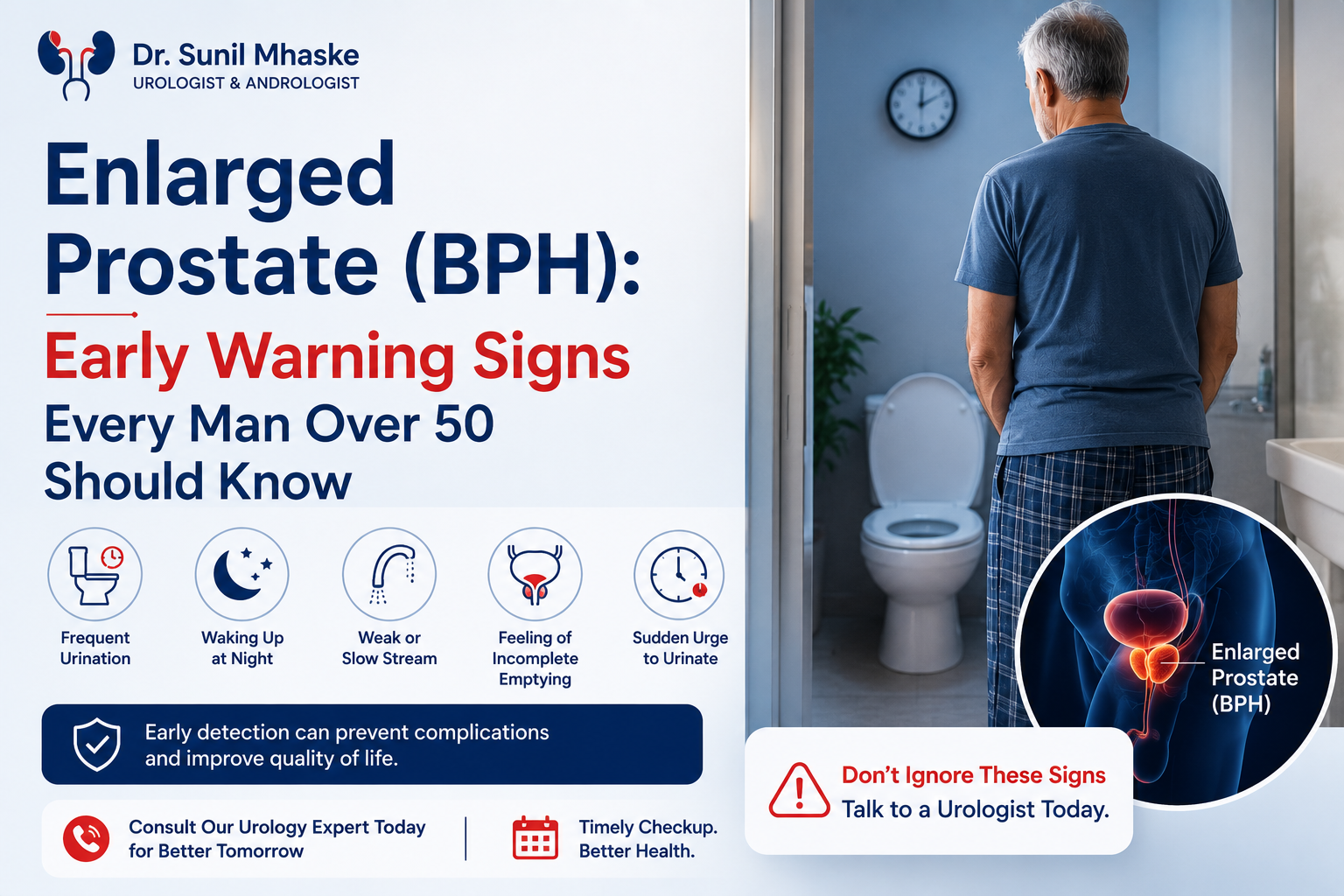
7 Early Enlarged Prostate Symptoms Every Man Should Know
Recognizing enlarged prostate symptoms early can help prevent urinary complications.
- Frequent Urination
One of the earliest signs of BPH is needing to urinate more often than usual, especially during the day.
Many men notice they cannot go long without visiting the bathroom.
- Frequent Urination at Night (Nocturia)
Waking up multiple times during the night to urinate is a common BPH symptom.
Interrupted sleep can affect energy levels, concentration, and overall quality of life.
- Weak Urine Stream
As the enlarged prostate presses against the urethra, urine flow becomes slower and weaker.
Men often describe the stream as less forceful than before.
- Difficulty Starting Urination
You may feel the urge to urinate but struggle to begin the flow.
This hesitation is another common symptom of prostate enlargement.
- Feeling That the Bladder Doesn’t Empty Completely
Even after urinating, many men continue to feel as though urine remains inside the bladder.
Incomplete emptying increases the risk of urinary tract infections and bladder stones.
- Dribbling After Urination
Urine may continue to leak or drip after you’ve finished urinating.
Although often overlooked, this is an important early sign of BPH.
- Sudden Urgency to Urinate
Many men with BPH experience a strong, sudden urge to urinate that is difficult to control.
This urgency may interfere with travel, work, and daily activities.
When Should You Be Concerned?
While mild urinary symptoms may develop gradually, certain warning signs require immediate medical attention.
Consult a urologist promptly if you experience:
- Blood in the urine
- Pain while urinating
- Fever with urinary symptoms
- Complete inability to pass urine
- Severe lower abdominal pain
- Recurrent urinary tract infections
These symptoms may indicate complications or another underlying condition.
Can BPH Cause Complications?
Yes. If left untreated, an enlarged prostate may lead to:
- Urinary retention (inability to urinate)
- Recurrent urinary tract infections
- Bladder stones
- Bladder damage
- Kidney damage due to prolonged urinary obstruction
Early treatment helps reduce the risk of these complications.
How Is BPH Diagnosed?
Your urologist will review your symptoms and medical history before performing an evaluation.
Diagnostic tests may include:
Physical Examination
Including a digital rectal examination (DRE) to assess prostate size.
Urine Test
To rule out infection or blood in the urine.
PSA Blood Test
A Prostate-Specific Antigen (PSA) test may be recommended to help evaluate prostate health. While PSA levels can be elevated in BPH, they may also rise due to prostatitis or prostate cancer. The result should always be interpreted by your doctor in the context of your symptoms and examination.
Ultrasound
To examine the prostate, bladder, and kidneys.
Uroflowmetry
Measures the strength and speed of urine flow.
Post-Void Residual (PVR) Scan
Checks how much urine remains in the bladder after urination.
These tests help determine the severity of BPH and guide the most appropriate treatment.
Treatment Options for Enlarged Prostate
Treatment depends on symptom severity, prostate size, and overall health.
Lifestyle Changes
Men with mild symptoms may benefit from:
- Reducing caffeine and alcohol
- Limiting fluids before bedtime
- Maintaining a healthy weight
- Regular physical activity
- Avoiding delaying urination
Medications
Doctors may prescribe medications that:
- Relax the prostate muscles to improve urine flow
- Reduce prostate size over time
- Improve urinary symptoms
Medication selection depends on individual patient needs.
Minimally Invasive Procedures
For men whose symptoms persist despite medication, minimally invasive treatments can provide relief with shorter recovery times.
Examples include:
- Laser prostate surgery
- Transurethral procedures
- Other advanced endoscopic techniques
Your urologist will recommend the most suitable option based on your condition.
Can BPH Be Prevented?
Although aging cannot be prevented, healthy lifestyle habits may help support prostate health.
Helpful measures include:
- Exercise regularly.
- Maintain a healthy weight.
- Eat a balanced diet rich in vegetables and fruits.
- Control diabetes and blood pressure.
- Avoid smoking.
- Stay hydrated.
- Schedule regular health check-ups after age 50.
Early evaluation remains the best way to detect prostate problems before they become severe.
When Should You See a Urologist?
Don’t ignore urinary changes simply because you’re getting older.
You should consult a urologist if:
- You frequently wake at night to urinate.
- Your urine stream becomes weak.
- You have difficulty starting urination.
- You feel your bladder isn’t empty.
- Symptoms interfere with your daily life.
- You notice blood in your urine.
Early treatment can improve symptoms, protect bladder function, and prevent complications.
Frequently Asked Questions
Early enlarged prostate symptoms include frequent urination, waking at night to urinate, a weak urine stream, difficulty starting urination, and feeling that the bladder doesn’t empty completely.
No. Benign Prostatic Hyperplasia (BPH) is a non-cancerous enlargement of the prostate. However, because the symptoms can overlap with prostate cancer, medical evaluation is important.
BPH commonly begins after age 50, and the risk increases as men get older.
Yes. Many men experience symptom relief with lifestyle changes and medications. Surgery or minimally invasive procedures are usually recommended only for moderate to severe symptoms or complications.
You should see a urologist if urinary symptoms persist, worsen over time, interfere with daily life, or if you experience blood in the urine, urinary retention, or recurrent urinary infections.