- oceans.entp@gmail.com
- 0 Comments
Dr. Sunil Mhaske Urology
Best Urologist in Pimpri Chinchwad & Pune
MBBS, MS, MCh (Urology) — All India Rank 3. 15+ years treating kidney stones, prostate enlargement, bladder cancer & male infertility with laser, laparoscopic and robotic surgery. 24x7 emergency urology care.
Kidney Stones: Symptoms, Causes, Treatment & Prevention
Kidney stones are among the most common conditions I treat as a urologist — and anyone who has passed one will tell you the pain is unforgettable. In our hot climate, where dehydration is so common, stones are especially frequent, and I see patients of every age at my clinic in Pimpri Chinchwad. The reassuring news is that kidney stones are highly treatable, and today most can be dealt with using minimally invasive techniques, often without a single large cut. In this guide, I’ll explain the symptoms, causes, treatment options, and how to keep stones from coming back.
What are kidney stones?
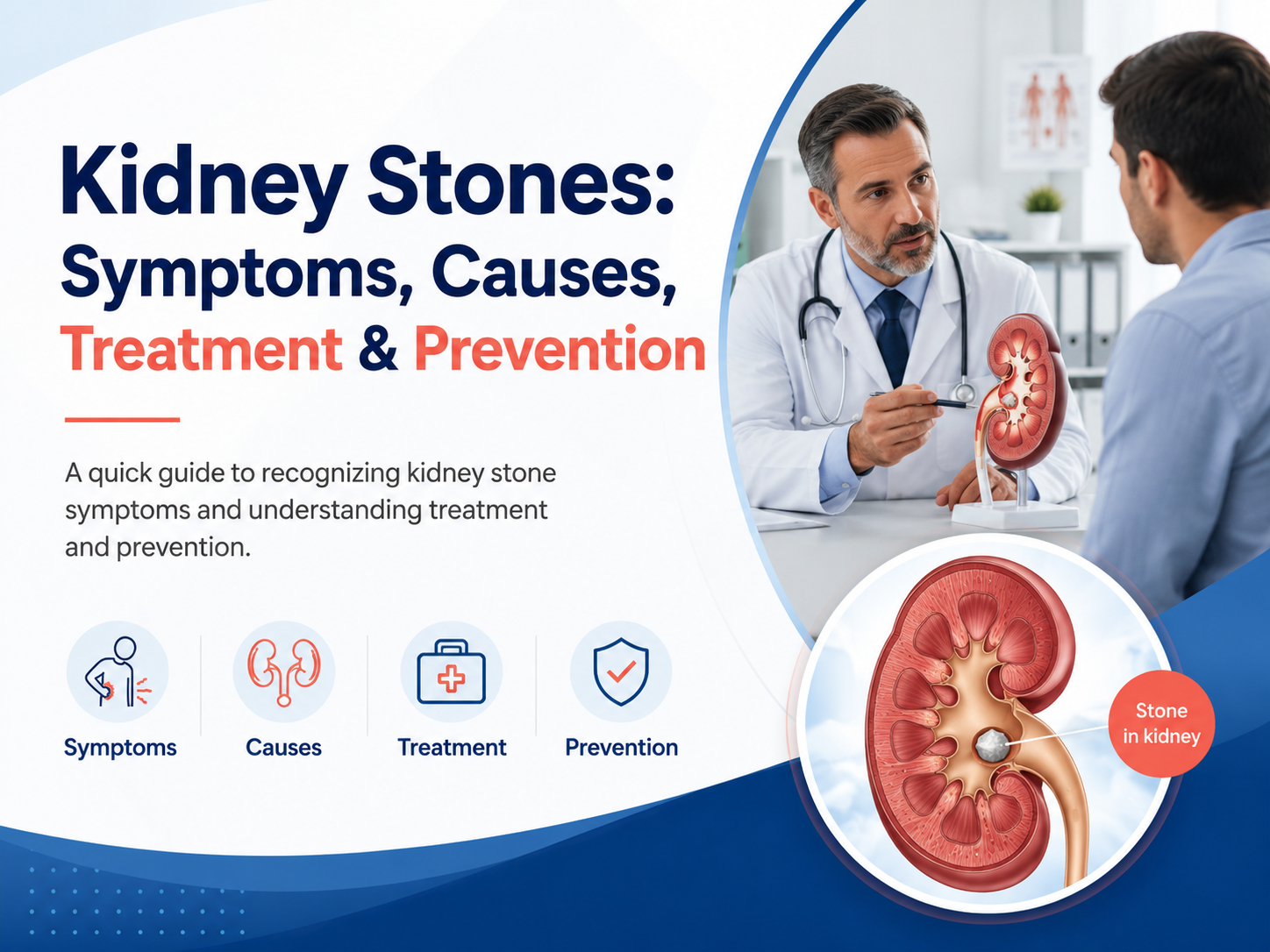
Kidney stones (medically, renal calculi) are hard, crystal-like deposits of minerals and salts — such as calcium, oxalate, and uric acid — that form inside the kidneys when the urine becomes too concentrated. They can be as small as a grain of sand or grow much larger. Small stones may pass out unnoticed, but larger ones can get stuck in the ureter (the narrow tube connecting the kidney to the bladder), blocking urine flow and causing intense pain.
Types of kidney stones
Knowing the type of stone helps prevent future ones. Calcium oxalate stones are by far the most common. Uric acid stones are linked to a high-protein diet and gout. Struvite stones are associated with urinary infections, and cystine stones are rare and run in families. When possible, I analyse the stone to give patients tailored prevention advice.
Symptoms of kidney stones
A small stone sitting quietly in the kidney may cause no symptoms. Trouble usually begins when it starts to move. Watch for:
- Severe, cramping pain in the back, side, or flank that radiates to the lower abdomen and groin — the classic “loin to groin” pain that often comes in waves
- Blood in the urine (pink, red, or brown)
- Nausea and vomiting
- Pain or burning while urinating, and a frequent urge to go
- Cloudy or foul-smelling urine
- Fever and chills — a warning sign of infection
What causes kidney stones?
The single biggest cause is dehydration — when you don’t drink enough water, your urine becomes concentrated and crystals form more easily. Other important factors include a diet high in salt, animal protein, and oxalate-rich foods (like spinach, nuts, and chocolate), obesity, a family history of stones, our hot climate, and certain conditions such as recurrent urinary infections or gout. Because stones tend to recur, prevention is just as important as treatment.
When is it an emergency?
Most stones are painful but not immediately dangerous. However, please seek urgent care — including at our 24×7 emergency service — if you have severe pain that isn’t relieved by painkillers, fever and chills (a sign of infection), persistent vomiting, blood in the urine, or difficulty passing urine. A blocked, infected kidney needs prompt treatment.
How are kidney stones diagnosed?
Diagnosis is quick and precise. I typically use a urine test (to check for blood and infection), blood tests (to assess kidney function), and imaging — usually an ultrasound or a CT scan, which pinpoints the exact size and location of the stone. This lets me recommend the most suitable, least invasive treatment for you.
Modern kidney stone treatment
Treatment depends on the size, type, and location of the stone, and my goal is always the least invasive effective option.
Small stones often pass on their own with plenty of fluids, pain relief, and medication (alpha-blockers) that relaxes the ureter.
Larger or obstructing stones are treated with advanced, minimally invasive techniques — no large cuts:
- ESWL (shock wave lithotripsy) — sound waves break the stone into tiny fragments that pass naturally
- RIRS / ureteroscopy with laser — a thin scope passes up the urinary tract and a laser breaks the stone, with no external incision
- PCNL (percutaneous nephrolithotomy) — keyhole removal of large stones through a tiny incision in the back
My clinic is equipped with advanced laser and endoscopic technology for all of these.
Can kidney stones be removed without surgery?
Yes — this is one of the most common questions I’m asked. Small stones (usually under 5 mm) can often pass on their own with plenty of water and medication. For bigger stones, ESWL and laser (RIRS) treat them effectively without any large cuts. Only certain large or complex stones need keyhole surgery like PCNL. The right choice is decided after a proper scan.
How to prevent kidney stones
Prevention is largely in your hands. The most important step is to drink plenty of water throughout the day — aim for pale, clear urine, especially in summer. Beyond that: reduce salt, moderate animal protein, limit very oxalate-rich foods if you’re prone to stones, and maintain a healthy weight. A squeeze of lemon in water can help too, as citrate discourages stone formation.
Expert kidney stone treatment at Dr. Sunil Mhaske’s clinic
Kidney stone pain shouldn’t be endured or ignored. With advanced laser, RIRS, ESWL and PCNL facilities and over 13 years of experience, I provide accurate diagnosis and minimally invasive stone treatment, backed by 24×7 emergency urology care, at my clinic in Pimpri Chinchwad, serving Pimple Saudagar, Pimpri and Pune.
Frequently Asked Questions
Stones under about 5 mm often pass on their own with plenty of water and medication. Larger stones, or those causing blockage or infection, usually need laser or shock-wave treatment.
Yes. Many small stones pass naturally, and larger ones can be treated with ESWL or laser (RIRS) without any large cuts. Only certain big stones need keyhole PCNL.
Modern treatments like RIRS and ESWL are minimally invasive and done under anaesthesia, so the procedures are not painful, and recovery is usually quick.
Dehydration is the biggest cause. A diet high in salt, protein, and oxalate-rich foods, along with our hot climate, also raises the risk.
Enough to keep your urine pale and clear throughout the day, and more in hot weather or with physical activity.